In intelligent manufacturing environments, productivity and automation are often prioritized, yet safety remains the fundamental boundary of factory operations. Without a structured emergency management framework, even the most sophisticated digital infrastructure cannot guarantee operational continuity. Smart factory emergency management planning therefore plays a decisive role in ensuring safety risk prevention, regulatory compliance, and long-term operational stability.
A comprehensive emergency management system integrates facility layout planning, hazard identification, digital monitoring, contingency procedures, and regular drills into a unified safety architecture. When embedded into smart factory design from the early planning stage, this system transforms safety from a reactive response mechanism into a proactive risk control strategy. In this blog post, Shoebill Technology, as professional factory planning and plant layout service exporter, will share the smart factory emergency management planning and safety risk prevention for stable industrial operations.
Embedding Safety Architecture into Smart Factory Design
Emergency management should not be treated as an afterthought appended to factory construction. Instead, it must be integrated into smart factory design as a core structural element.
A scientifically structured safety planning framework includes:
Hazard source identification during site planning
Zoning of high-risk and low-risk operational areas
Separation of hazardous material storage from production lines
Integration of fire protection systems into building structures
Reserved emergency evacuation corridors
When emergency planning is aligned with smart factory layout principles, facility organization becomes inherently safer. Clear separation between production zones, logistics corridors, and hazardous material areas reduces cross-risk exposure. Additionally, rational equipment positioning lowers the probability of fire propagation or chain-reaction incidents.
Smart factory design layout must therefore consider not only production efficiency but also emergency accessibility, safe evacuation distance, and fire compartmentalization.
Emergency Facility Planning Within Smart Factory Layout
Physical infrastructure forms the first defensive barrier against industrial accidents. A well-structured smart factory layout incorporates comprehensive emergency facility deployment to ensure rapid response capability.
Fire Protection Infrastructure Deployment
Fire pump rooms, hydrant systems, extinguishers, sprinkler networks, and fire alarm panels must be strategically distributed across production buildings and warehouse areas. Key planning principles include:
Ensuring multiple evacuation exits per floor
Maintaining unobstructed emergency corridors
Installing photoluminescent signage for visibility during power outages
Designing fire-resistant partitions in high-risk zones
In high-temperature workshops such as melting or casting areas, fire-resistant materials and explosion-proof installations are essential. Emergency access routes must be clearly marked and structurally protected to prevent obstruction during incidents.
Hazardous Area Safety Equipment Configuration
Facilities storing chemicals, flammable liquids, or toxic gases require enhanced protective systems. These may include:
Gas detection and alarm systems
Automatic ventilation systems
Explosion-proof lighting and wiring
Secondary containment structures
Emergency showers and eye-wash stations
Integrating these systems within smart factory design layout ensures that hazard detection and suppression mechanisms operate independently from production systems, reducing systemic risk.
Risk Identification and Industrial Safety Assessment Framework
Emergency management planning begins with systematic risk assessment. Without accurate hazard mapping, emergency measures may lack precision.
A structured safety risk prevention model includes:
Identification of fire, explosion, leakage, and equipment failure risks
Classification of risk severity levels
Evaluation of probability and potential impact
Formulation of preventive and control measures
Establishment of monitoring and reporting standards
In intelligent factories, digital twin modeling and simulation tools can be used to predict fire spread patterns, evacuation timing, and ventilation performance under emergency scenarios. This predictive analysis enhances the scientific rigor of smart factory design by incorporating data-based safety validation.
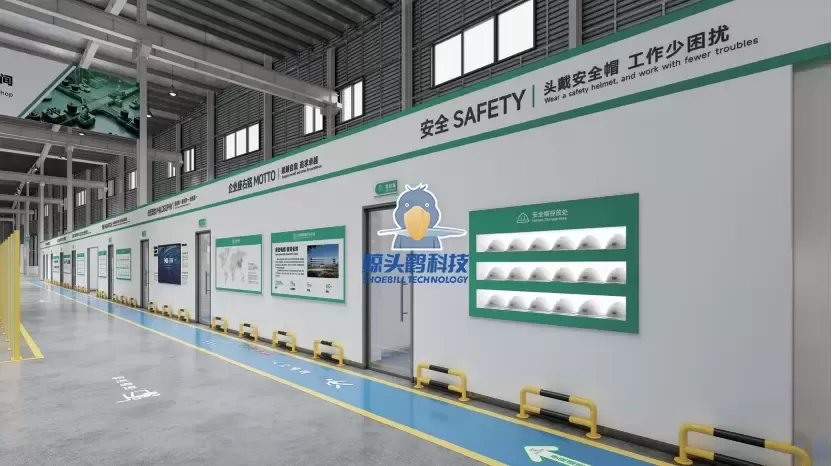
Emergency Response Planning and Organizational Structuring
A comprehensive emergency response system requires more than infrastructure; it requires procedural clarity and defined responsibilities.
Structured Emergency Response Plans
Detailed emergency procedures must be established for:
Fire incidents
Chemical leaks
Gas overexposure
Equipment malfunctions
Power system failures
Each emergency plan should define:
Alarm initiation procedures
On-site containment steps
Evacuation routes and assembly points
Communication protocols
External authority notification mechanisms
Clarity of sequence is essential. Emergency response stages should be logically organized, ensuring no ambiguity during high-pressure situations.
Responsibility Allocation and Command Hierarchy
Effective safety risk prevention depends on defined organizational roles, such as:
This structured hierarchy eliminates confusion during incidents. Integrating this framework into smart factory layout planning ensures that emergency assembly zones and command centers are positioned strategically within the facility.
Digital Integration of Emergency Management Systems
In intelligent manufacturing environments, emergency systems should not operate in isolation. Digital integration enhances speed, transparency, and coordination.
Real-Time Monitoring and Automated Alerts
Modern emergency management systems incorporate:
Fire alarm monitoring platforms
Gas concentration sensors
Equipment status dashboards
Intelligent CCTV systems
Environmental monitoring networks
When integrated into smart factory design, these systems enable automatic detection and immediate alert transmission. Alerts can trigger ventilation systems, shut down high-risk equipment, or notify responsible personnel in real time.
Centralized Smart Park Safety Platforms
In industrial parks or multi-building complexes, centralized management platforms provide unified supervision. Key capabilities include:
Real-time facility status monitoring
Automatic escalation procedures
Data logging for compliance audits
Coordination with local emergency authorities
Digitalized emergency coordination shortens response time and enhances accountability. Smart factory design layout that supports centralized control rooms and data infrastructure significantly strengthens safety governance.
Emergency Drill Planning and Workforce Preparedness
Infrastructure and digital systems are ineffective without trained personnel. Human readiness remains a critical component of industrial safety.
Structured Emergency Drill Programs
Regular emergency drills should simulate:
Drills must follow standardized evaluation criteria, including response time, procedural compliance, and communication effectiveness.
Continuous Safety Training
Safety awareness programs should be embedded into employee onboarding and periodic retraining. Training content may include:
Fire extinguisher operation
Alarm recognition and reporting
Evacuation route familiarity
Personal protective equipment usage
Incorporating workforce preparedness into smart factory layout planning ensures that signage, evacuation maps, and safety instructions are visibly and logically positioned throughout the facility.
Compliance, Governance, and Regulatory Alignment
Smart factory emergency management planning must align with national fire codes, environmental regulations, occupational health standards, and industrial safety compliance frameworks.
Comprehensive documentation is essential, including:
Embedding compliance documentation into digital platforms improves traceability and simplifies regulatory audits.
Strengthening Long-Term Safety Risk Prevention Capabilities
Industrial safety is not achieved through isolated measures but through systematic integration. A robust emergency management strategy delivers:
Reduced operational risk exposure
Enhanced incident response speed
Lower insurance and liability costs
Improved workforce confidence
Stronger corporate governance
When emergency planning is embedded into smart factory design from inception, safety becomes a structural feature rather than a corrective addition. A well-planned smart factory design layout ensures that efficiency and safety coexist without compromise.
Building Resilient Intelligent Manufacturing Environment
Sustainable intelligent manufacturing requires both operational efficiency and uncompromised safety control. Smart factory emergency management planning bridges these two priorities by embedding safety risk prevention mechanisms into physical infrastructure, digital systems, and organizational processes.
Through structured facility deployment, systematic risk assessment, defined emergency procedures, digital integration, and workforce preparedness, enterprises can establish a comprehensive safety defense system. Integrating these elements into smart factory layout and smart factory design creates a resilient industrial ecosystem capable of withstanding operational uncertainties and external risks.
In modern manufacturing, safety is not merely compliance—it is strategic stability. A comprehensive emergency management framework ensures that intelligent factories operate securely, responsibly, and sustainably in an increasingly complex industrial environment.