
Dec 11, 2025
Smart Warehouse Planning for High-Efficiency Logistics and Inventory Management
In the evolution from traditional manufacturing to intelligent production, technology alone does not guarantee results. Robotics, MES platforms, IoT sensors, and digital dashboards can only deliver value when supported by a robust standardized management system. For enterprises pursuing true digital transformation, building a structured smart factory standardization framework is not optional—it is foundational.
A comprehensive smart factory standardization system integrates equipment, materials, personnel, and processes into a unified operational model. In this blog post, Shoebill Technology, as professional smart factory design service exporter, will share the features of smart factory standardization system layout for operational excellence and sustainable efficiency.
Many manufacturers focus on automation hardware or software upgrades during smart factory design, but overlook the structural role of management standards. Without clear specifications, even advanced equipment may operate inconsistently, and digital data may lack comparability.
Standardization functions as the architecture behind intelligent manufacturing. It defines:
Unified equipment specifications
Structured data coding systems
Standard operating procedures (SOPs)
Defined process flows
Clear performance evaluation metrics
When embedded at the early stage of smart factory design, these standards prevent fragmentation. They ensure that layout planning, equipment procurement, workflow sequencing, and digital system integration are coordinated from the outset.
In high-performance smart factory layout planning, physical space, logistics routes, and production cells are aligned with standardized operational logic. This alignment reduces redundancy, shortens material movement paths, and supports lean manufacturing objectives.
Standardization therefore transforms smart factories from technology-driven environments into system-driven operational ecosystems.
Equipment management is often the largest source of operational variability in manufacturing facilities. A smart factory standardization system must begin with clearly defined equipment standards covering procurement, installation, maintenance, and retirement.
A standardized procurement framework ensures consistency in machine models, core components, and technical parameters. Unified equipment selection improves:
Spare parts compatibility
Maintenance training efficiency
Predictive maintenance modeling
Lifecycle cost control
When machine specifications are harmonized across production lines, digital monitoring systems can collect structured and comparable data. This enhances the accuracy of equipment performance analytics and supports condition-based maintenance strategies.
Standardized equipment coding and digital asset registers enable real-time visibility into machine status, operating hours, and maintenance cycles. Integrated IoT systems, when combined with standardized data fields, create a transparent and controllable equipment ecosystem.
The result is reduced downtime, shorter maintenance cycles, and improved overall equipment effectiveness (OEE). Within smart factory design, equipment standardization transforms isolated machines into interconnected production assets.
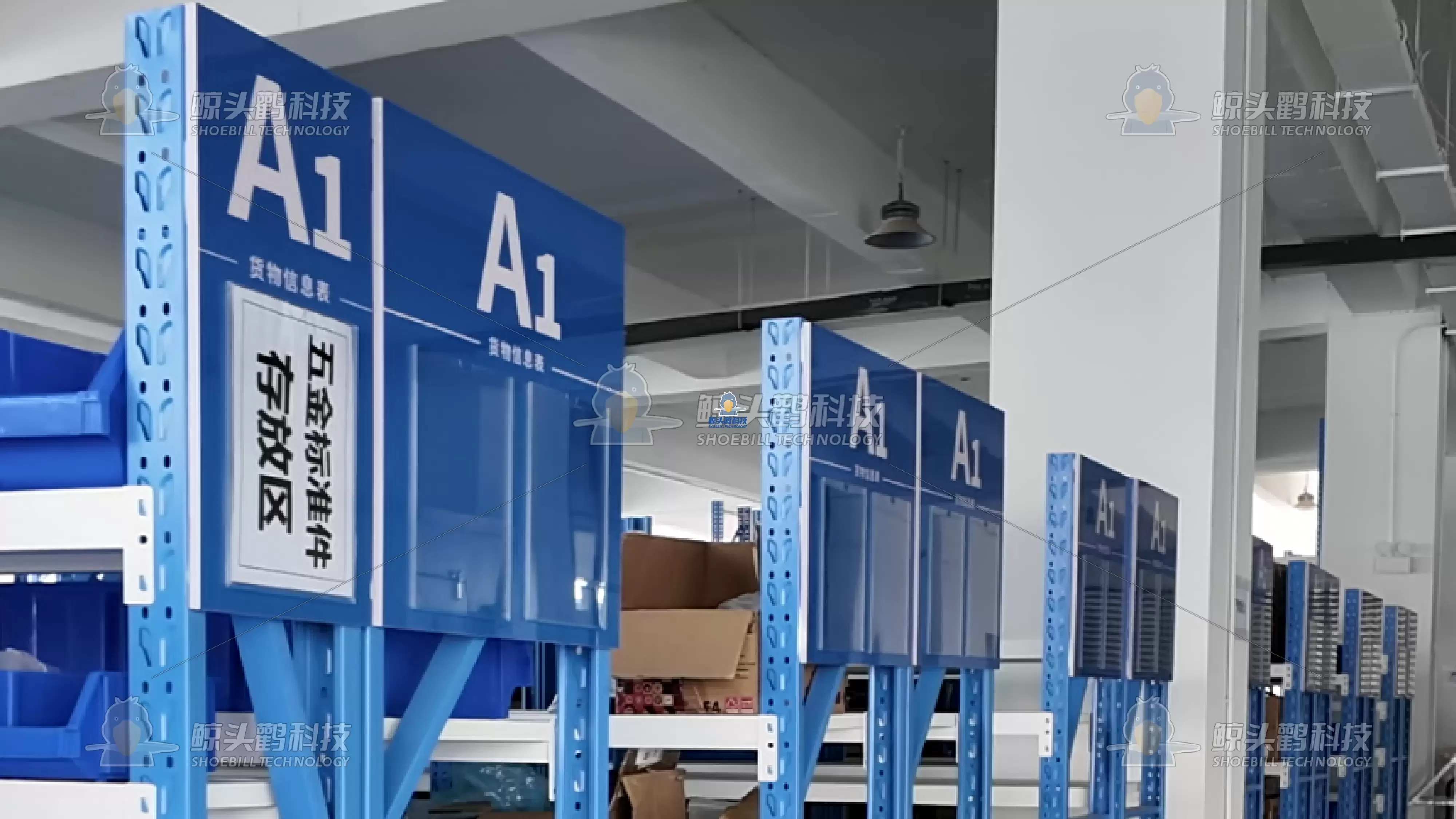
Material flow inefficiency is a hidden cost driver in many factories. A well-structured smart factory layout is ineffective without standardized material management.
Each raw material, semi-finished product, and finished component must be assigned a unique digital code. Barcodes, QR codes, or RFID tags enable precise identification and seamless integration with warehouse management systems (WMS) and manufacturing execution systems (MES).
Standardized material coding delivers several benefits:
Accurate inventory visibility
Reduced picking errors
Faster inbound and outbound processing
Enhanced traceability compliance
When material identification aligns with smart factory design principles, warehouses transition from manual storage areas to data-driven logistics hubs.
Beyond coding, material standardization includes:
Defined storage zoning
FIFO or FEFO policies
Standardized shelving dimensions
Unified container specifications
Fixed picking routes
These measures reduce search time and eliminate ambiguity in daily operations. Within optimized smart factory layout planning, material flow becomes predictable and measurable, significantly increasing inventory turnover and minimizing working capital pressure.
A smart factory is not a “lights-out” environment devoid of human involvement. Instead, it requires highly trained and standardized operators who interact with intelligent systems.
Standard operating procedures define:
Equipment operation steps
Safety protocols
Quality inspection criteria
Troubleshooting guidelines
SOP standardization ensures that production output is consistent regardless of shift or operator. In intelligent manufacturing environments, standardized procedures also improve the quality of digital data input, which is critical for AI-based analytics.
A structured training framework aligns personnel development with smart factory design objectives. Training modules should cover:
Digital system usage
Equipment operation standards
Lean production principles
Quality control standards
When performance evaluation systems are standardized, enterprises can objectively measure skill proficiency, productivity, and compliance rates. This reduces operational variability and supports continuous improvement initiatives.
Workforce standardization ultimately strengthens collaboration between human operators and automated systems, creating a balanced and resilient manufacturing model.
Process inefficiency is often invisible until measured against standardized benchmarks. In intelligent manufacturing, standardized production and logistics processes are essential to maintain flow stability.
Clear production pathways—such as casting, machining, assembly, inspection, and warehousing—must be defined and documented. These standardized workflows eliminate bottlenecks and ensure predictable production cycles.
When smart factory layout planning aligns production cells with standardized process flows, transportation distances decrease and cycle times shorten. Physical layout and process logic must reinforce each other.
Material transport routes, AGV pathways, and conveyor systems should follow defined patterns. Standardized logistics routing:
Reduces congestion
Improves safety
Enhances throughput predictability
Supports digital tracking accuracy
Without process standardization, even advanced smart factory design loses structural integrity. Workflow clarity ensures that automation technologies operate within a controlled operational framework.
Digital transformation should not be treated as a separate initiative. Instead, MES, ERP, WMS, and IoT platforms must operate within a standardized data and management structure.
Data consistency is a core requirement for intelligent manufacturing analytics. Standardized naming conventions, data fields, coding logic, and reporting formats ensure seamless integration between systems.
When smart factory design incorporates digital architecture from the planning phase, enterprises avoid data silos and redundant manual entry.
Standardization enables meaningful benchmarking. With clear operational baselines, enterprises can track:
Production cycle time
Equipment utilization rates
Inventory turnover
Labor productivity
Quality defect rates
Continuous improvement initiatives rely on measurable standards. Data-driven decision-making becomes possible only when standardized metrics are consistently applied.
Beyond the shop floor, management processes must also be standardized to sustain operational excellence.
Daily meetings, shift handovers, inspection routines, and reporting formats should follow defined templates. Standardized governance mechanisms reduce information loss and improve cross-department coordination.
Standardization strengthens regulatory compliance and internal audit readiness. Clear documentation, traceability systems, and controlled process flows minimize operational risks and improve corporate governance transparency.
Within a comprehensive smart factory standardization system, management structures support—not hinder—operational efficiency.
A systematic standardization framework delivers both immediate and long-term benefits:
Improved operational efficiency
Reduced management costs
Shorter production cycles
Higher equipment reliability
Increased inventory turnover
Enhanced workforce productivity
More importantly, standardized management builds scalability. As enterprises expand production lines or replicate facilities, established standards ensure consistent performance across sites.
In competitive global markets, operational stability becomes a strategic advantage. Smart factory design combined with standardized management creates a resilient manufacturing system capable of adapting to demand fluctuations, technological upgrades, and supply chain disruptions.
Intelligent manufacturing is not defined solely by automation or digitalization. It is defined by control, predictability, and continuous optimization. These outcomes are achievable only through structured standardization.
A well-designed smart factory layout, supported by unified equipment standards, material traceability systems, personnel SOP frameworks, and optimized process flows, transforms complexity into clarity. Enterprises that prioritize standardization establish a management backbone that amplifies the value of technology investments.
In the journey toward intelligent manufacturing transformation, standardized management is the invisible engine that powers operational excellence. It converts smart factory design concepts into measurable performance gains and turns digital ambition into sustainable industrial competitiveness.

Add: Room 501, Building 1, Lane 668, Defu Road,Jiading District,Shanghai, China
Tel: 021-61354399
Contact: Mr. Chen