
Aug 06, 2025
Smart Factory Planning: Blueprint for Next-Generation Industrial Efficiency
In modern industrial environments, factory productivity is no longer determined solely by equipment capacity or labor efficiency. Instead, it increasingly depends on how intelligently the manufacturing environment is planned, structured, and managed. A well-designed manufacturing workshop layout can eliminate operational waste, shorten production cycles, and enable seamless collaboration between people, machines, and data systems.
Many manufacturers are now moving away from traditional workshop planning methods toward integrated smart factory strategies. Through systematic planning, factories are evolving from static production spaces into responsive and data-driven environments that actively support decision-making.
Based on years of implementation experience in industrial factory transformation projects, four key strategies have proven highly effective in improving operational performance: pre-planning through factory investigation, visualized design systems, standardized material management, and digital monitoring platforms. When applied together, these strategies significantly improve production efficiency, reduce management complexity, and establish the foundation for intelligent manufacturing systems. In this blog post, Shoebill Technology, a professional benchmark factory design service provider, will share the smart factory planning strategies that transform manufacturing workshop layout and operational efficiency.
Before any equipment installation or layout redesign begins, a comprehensive factory investigation is essential. Many layout optimization projects fail because they rely on assumptions rather than accurate data about production flow, space utilization, and operational constraints.
A systematic factory survey collects critical information such as:
• Precise building dimensions and spatial limitations
• Existing equipment distribution and workstation functions
• Actual material transportation routes
• Frequency and direction of production flow
• Warehouse-to-production interaction patterns
These data points form the basis for designing a rational manufacturing workshop layout that minimizes unnecessary movement and eliminates hidden inefficiencies.
For example, during a factory optimization project, engineers conducted a full spatial measurement and mapped the actual movement paths of raw materials, semi-finished products, and finished goods. By reconstructing the layout based on the real production flow rather than the historical arrangement, logistics routes were redesigned to eliminate multiple redundant transfers.
The result was a 30% reduction in internal transportation distance, which directly improved production cycle time and reduced labor requirements.
This type of systematic investigation also supports long-term scalability. Instead of designing a layout that only fits current production needs, the planning process anticipates future equipment expansion, product diversification, and automation upgrades. In this way, the factory evolves toward a modern manufacturing workshop layout capable of supporting long-term growth.
Once the spatial planning is complete, the next step is implementing a visual management system that transforms the workshop into an intuitive operating environment.
Visual management ensures that employees can instantly understand workspace functions, operational status, and material placement without relying on verbal instructions or lengthy training.
A structured visual design system typically includes:
• Color-coded functional zones
• Clear workstation identification
• Standardized floor markings
• Equipment status indicators
• Safety and workflow guidance
In many modern factories, color zoning has become an effective management method. For example:
• Yellow zones represent production areas
• Blue zones indicate storage areas
• Red zones identify defective product handling spaces
This color-based system enables operators to quickly identify workspace boundaries and responsibilities. It also aligns with internationally recognized 5S standards, particularly the SEISO principle of workplace cleanliness and organization.
In one manufacturing workshop improvement project, the introduction of visual design standards significantly improved workforce adaptability. Newly hired employees were able to understand workflow procedures and operational zones much faster, reducing onboarding time by approximately 50%.
A well-implemented visual management system reinforces the efficiency of the manufacturing workshop layout, ensuring that the physical design translates into practical operational improvements rather than remaining purely conceptual.
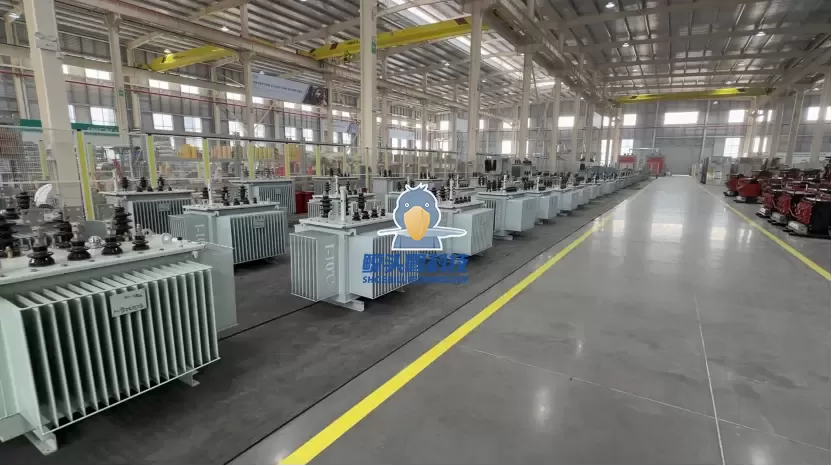
Material management plays a critical role in maintaining production stability. In many traditional factories, production delays occur not because of equipment failure but because operators cannot quickly locate the required materials.
Standardizing material identification and storage methods is therefore a crucial step in building an efficient factory environment.
A standardized system typically assigns a unique identity to every material and tool using technologies such as:
• Barcode identification
• QR code labeling
• RFID tracking systems
Each material is linked to a fixed storage location, a digital record, and a standardized handling procedure.
Under this system, operators can quickly locate materials and complete the entire retrieval process within approximately 20 seconds. This dramatically reduces time spent searching for components or confirming inventory.
In one warehouse optimization project, the introduction of standardized labeling and storage procedures doubled material picking efficiency. The improvement also reduced inventory errors and simplified stock management.
Material standardization becomes even more powerful when combined with a professional lean plant layout approach. Lean layout principles ensure that materials are stored close to their point of use, minimizing unnecessary movement while maintaining clear organization.
This integration of spatial design and material management enables factories to achieve a smooth, predictable production flow that supports lean manufacturing practices.
While physical layout and material systems improve operational efficiency, digital monitoring provides the transparency needed for intelligent decision-making.
Modern factories increasingly deploy centralized monitoring platforms that collect and visualize operational data in real time. These systems typically include:
• Equipment performance monitoring
• Production progress tracking
• Machine downtime alerts
• Maintenance status reporting
• Energy consumption analysis
The data collected from machines and sensors are displayed on large digital dashboards located within the workshop or control room. Managers and operators can instantly view production status without manually checking individual machines.
In one manufacturing facility that implemented a digital monitoring system, equipment alarms and downtime notifications were automatically reported through the centralized platform. Maintenance personnel could immediately identify the location and cause of failures.
As a result, the average response time to equipment faults was reduced to less than 10 minutes, significantly improving overall production reliability.
When integrated with an intelligently designed manufacturing workshop layout, digital monitoring platforms allow factories to shift from reactive management to proactive optimization.
Although each of the above strategies provides measurable benefits on its own, their real value emerges when they are implemented as an integrated system.
A comprehensive smart factory planning process typically follows four sequential stages:
1. Factory investigation and spatial data collection
Establish accurate data on building dimensions, logistics paths, and operational constraints.
2. Workshop layout optimization and visual system design
Create a functional production environment with clear spatial organization and intuitive visual guidance.
3. Standardized material management implementation
Ensure every component, tool, and inventory item has a traceable identity and fixed storage logic.
4. Digital monitoring platform deployment
Provide real-time operational visibility to support data-driven production management.
When these strategies work together, factories can move beyond simple efficiency improvements and establish a truly intelligent manufacturing environment.
For example, in one integrated transformation project, the combination of layout redesign, visual management, standardized materials, and digital monitoring achieved the following results:
• Overall production efficiency increased by 45%
• Management costs decreased by 25%
• Equipment downtime response speed improved significantly
• Workforce training time was dramatically shortened
These improvements demonstrate how strategic planning can transform conventional production workshops into dynamic and responsive industrial systems.
As manufacturing continues to evolve toward automation and digitalization, the importance of intelligent spatial design will only increase.
A well-planned manufacturing workshop layout does far more than arrange machines and workstations. It establishes the operational framework that determines how efficiently materials move, how quickly employees respond to tasks, and how effectively digital technologies can be integrated.
Factories that treat layout planning as a strategic investment rather than a simple engineering task gain a clear competitive advantage. Their production systems become more adaptable, scalable, and resilient to market changes.
Organizations seeking to build future-ready production environments increasingly collaborate with a benchmark factory design service provider capable of integrating lean manufacturing principles, visual management systems, and digital technologies into a cohesive planning strategy.
Smart factory transformation begins with intelligent planning. By combining factory investigation, visual management design, standardized material systems, and digital monitoring platforms, manufacturers can dramatically improve operational efficiency and management transparency.
These four strategies work together to eliminate hidden inefficiencies, streamline production flow, and support the transition toward intelligent manufacturing environments.
More importantly, they allow factories to evolve from static production spaces into responsive systems capable of continuous improvement. With the right planning methodology and expertise, today’s industrial facilities can successfully transition into the next generation of smart factories built upon a robust and future-ready manufacturing workshop layout.

Add: Room 501, Building 1, Lane 668, Defu Road,Jiading District,Shanghai, China
Tel: 021-61354399
Contact: Mr. Chen