
Sep 10, 2025
From land to benchmarks, Shoebill Technology empowers the entire life cycle of smart factories!
In today’s competitive industrial landscape, traditional factory design often emphasizes production efficiency and operational functionality, neglecting opportunities to enhance brand value. As professional benchmark factory layout service provider, Shoebill Technology will share insights on marketing-oriented factory planning for maximizing brand value. This strategy integrates aesthetics, functionality, and customer experience, ensuring that factories serve not only as production hubs but also as immersive brand showcases.
Marketing-oriented factory planning refers to the strategic design of manufacturing facilities that balances production requirements with marketing objectives. Unlike conventional “production-centric” layouts, this approach positions the factory as a tangible representation of the brand. It allows clients, partners, and visitors to experience the company’s values, technological capabilities, and product quality firsthand. By aligning operational design with marketing strategies, factories become multifunctional spaces that strengthen brand identity while maintaining high operational efficiency.
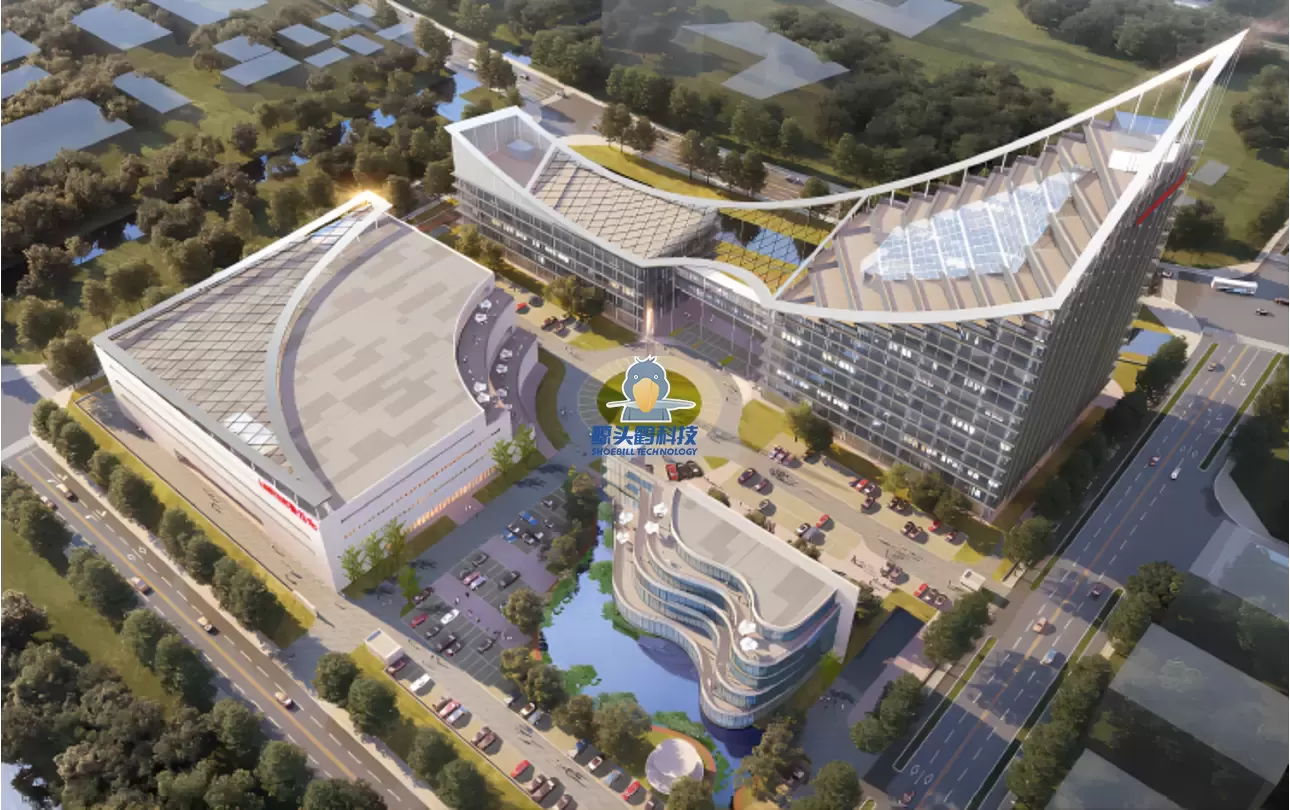
A key component of marketing-oriented factory planning is visual appeal. Shoebill Technology emphasizes modern industrial aesthetics that combine form and function. Design elements such as modular building clusters, color-coded rooftops, landscaped green belts, and standardized roadways create a visually striking factory environment. For instance, a 58,000-square-meter marketing-oriented factory integrates white production halls with green office areas and ecological parking lots, resulting in a harmonious “production-meets-landscape” effect. Such attention to visual detail reinforces brand perception, making the factory itself a memorable marketing asset.
Beyond aesthetics, marketing-oriented factory planning focuses on showcasing operational excellence. Facilities are designed with exhibition halls, smart storage systems, and guided production walkways that provide transparent views of manufacturing processes. Glass partitions, process display screens, and live demonstration areas allow visitors to understand core workflows, product quality standards, and technological innovations. Exhibition spaces often feature product models, process flow charts, and brand culture walls, offering an interactive learning experience that reinforces brand credibility.
Enhancing the customer experience is central to marketing-oriented factory planning. Factory layouts include dedicated reception areas, comfortable rest zones, and well-equipped conference rooms. Professional guides lead customized tours tailored to visitor interests, highlighting research and development capabilities or production efficiency depending on client needs. This experiential approach strengthens client trust, encourages long-term partnerships, and creates a positive association between the brand and operational transparency.
A practical example of marketing-oriented factory planning is Shoebill Technology’s work with a sugar industry service company. By integrating marketing-oriented strategies, the factory became a “transparent brand platform” where clients could observe operations and engage with the company’s culture. Post-visit surveys indicated a more than 30% increase in client willingness to collaborate, demonstrating the tangible benefits of aligning factory planning with marketing objectives.
Modern factories increasingly leverage smart technologies to enhance both efficiency and visitor engagement. Marketing-oriented factory planning incorporates IoT sensors, real-time production dashboards, and interactive displays, allowing visitors to monitor operations dynamically. Smart logistics and automated material handling systems not only improve operational performance but also serve as live demonstrations of innovation, reinforcing the brand’s commitment to quality and technological leadership.
Sustainability has become a critical aspect of industrial branding. In marketing-oriented factory planning, eco-friendly design elements such as energy-efficient lighting, renewable energy systems, and green landscaping contribute to environmental responsibility. Visitors perceive these efforts as a reflection of corporate values, enhancing brand reputation. By integrating sustainability into the factory design, companies demonstrate both operational efficiency and ethical responsibility, creating a compelling narrative for stakeholders.
Implementing marketing-oriented factory planning delivers measurable business advantages. Companies experience enhanced brand visibility, stronger client trust, and increased engagement opportunities. Factory tours and immersive experiences enable companies to differentiate themselves in competitive markets, leading to higher conversion rates and long-term client loyalty. Furthermore, internal staff benefit from a well-designed environment that supports productivity and fosters corporate pride.
When adopting marketing-oriented factory planning, companies should consider several factors:
Brand Alignment: Ensure design elements reflect core brand values.
Visitor-Centric Layout: Plan routes and display areas for optimal client experience.
Technology Integration: Use digital tools to showcase operational excellence.
Sustainability: Incorporate eco-friendly practices that reinforce corporate responsibility.
Scalability: Design flexible spaces that can adapt to future growth or product changes.
Marketing-oriented factory planning represents a paradigm shift in industrial design, merging production efficiency with strategic brand promotion. Shoebill Technology’s approach demonstrates how thoughtful integration of aesthetics, functional visibility, visitor experience, and sustainability can transform a factory into a living brand ambassador. Companies adopting this philosophy not only optimize their operational environment but also elevate their market position, driving both client engagement and long-term business success.

Add: Room 501, Building 1, Lane 668, Defu Road,Jiading District,Shanghai, China
Tel: 021-61354399
Contact: Mr. Chen